
“Chronic Pain in a Dish”: In vitro modelling of neuron-mediated chronic pain in the skin for pharmacology and toxicology
Chronic pain is a major health problem, affecting around 20 to 50 % of the world's population. Therapy methods are largely developed in behavioral tests with induced pain in rodents. No pain treatment is possible, which leads to severe stress for the animals. However, therapeutics developed in animals are not always effective in humans. Therefore, two in vitro models will be developed in human cells to quantify neuron-mediated chronic pain with the highest possible predictive power. To this end, stem cell-derived sensory neurons (1.) will be used to develop a luciferase-based exocytosis assay to make the increased release of the neuropeptides involved in the chronic pain response (substance P and calcitonin gene-related peptides) easily quantifiable. In addition, (2.) an innervated skin model will be developed to quantify neurite outgrowth and the expression of chronic pain-associated regulated genes of pain receptors and ion channels involved in pain transmission in vitro. Proof-of-concept for the use of the models in pharmacology and toxicology will be provided by inhibiting induced neuropeptide release, induced neurite outgrowth and induced gene expression with therapeutically effective substances or by triggering them via the addition of exogenous substances. In this way, molecular signaling pathways of chronic pain development can be modeled in vitro, directly in human cells, in order to avoid unnecessary animal testing and to develop effective and safe therapeutics for humans. Following the project, the skin model will be transferred to the modeling of atopic dermatitis by using induced pluripotent stem cells and primary cells from patients in order to develop specific in vitro disease models for the development of new therapies in cooperation with industrial partners. The project will also serve as a basis for further cross-area in vitro modeling, such as the simulation of chronic joint pain.

Project management
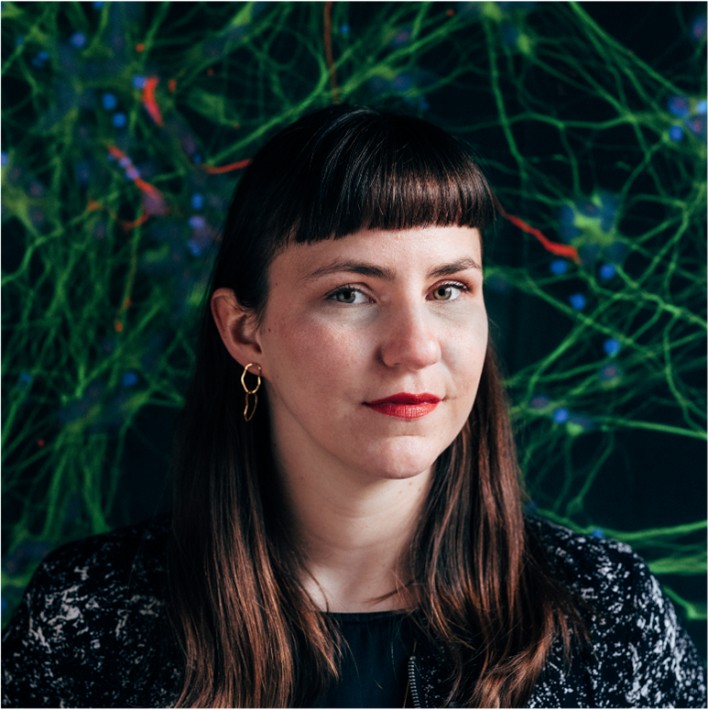
Prof. Bettina Seeger
Studies in Veterinary Medicine and Ph.D. in Toxicology at the University of Veterinary Medicine Hannover (TiHo). Habilitation-equivalent accomplishment as Junior Professor, since 2025 Adjunct Professor. Specialist Veterinarian for Pharmacology and Toxicology and European Registered Toxicologist (ERT). Head of the research group Food Toxicology and Alternative/Complementary Methods to Animal Experiments. Research focus: Human stem cell-based New Approach Methodologies (NAMs) for neurotoxicology, -infectiology, and -pharmacology. Board member of the Virtual Center for Alternative and Complementary Methods to Animal Experiments (VZET) of TiHo, member of the Center for Systems Neuroscience (ZSN) Hannover and the PARC National Hub "Human Tox". Former member of the Bf3R Commission. Recipient of the Young Toxicologist Merck Award (2025).
Cooperation

Kathrin Lämmerhirt
State-certified training as an animal caretaker followed by studies in veterinary medicine at the University of Veterinary Medicine Hannover Foundation. Her doctoral research focuses on the project “Chronic Pain in a Dish – In vitro modeling of neuron-mediated chronic pain in the skin,” funded by the SET Foundation.

Dr. Lisa Maria Haiber
B.Sc. and M.Sc. in Life Science with a focus on Chemistry from the University of Konstanz; PhD in Chemistry from the University of Konstanz with a focus on bioorganic chemistry, glycobiology, and glycan visualization. Since then, working as a postdoctoral researcher at the University of Veterinary Medicine Hannover (TiHo), focusing on the development of human‑relevant 3D cell culture models to study neurodevelopment and neurotoxicity, with a particular emphasis on glycan structures.